
Chengran (Felix) Guan
2026-09-03 · 14 min read
How to Offer Video Services as a Real Estate Photographer (No Second Shoot Required)
Yes — most real estate photographers can add a profitable video service line using the shoots they already book, the gear they already own, and an AI editing pipeline. Industry analysis by realfaster, a real estate photography education company, puts the share of US commercial photography businesses that offer real estate video services at just 7.1%. That gap is not a sign that video is hard to sell. It is a sign that most photographers have not built the product yet. This guide covers the two video service lines you can offer, the workflow that keeps a photo order on schedule while adding video, packaging and pricing models, and how to pitch video to the agent clients you already have.
Key Takeaways
- Video is a service-line gap, not a skills gap: only about 7% of US photography businesses offer real estate video, so the photographers who add it are selling into an under-served request instead of a price war.
- Two lines, one shoot day: photo-driven video (your finished stills animated into a tour) needs zero extra capture time, while a motion-capture walkthrough adds roughly 10–15 minutes on site with a camera you already own.
- AI does the assembly, you do the QC: modern AI editing tools select, sequence, caption, and brand the video, which collapses the editing step from hours to minutes — but your quality judgment is still the deliverable.
- Package video, do not price it in isolation: photo-plus-video bundles and add-on tiers sell better than a standalone video menu line because they raise the average order without asking the agent to make a separate buying decision.
- Your existing client list is the channel: the agents you already shoot for are the cheapest, highest-converting prospects for video — they trust your access, your turnaround, and your work.
The Video Services Gap Is Real — and It Is Yours to Close
Video is not a luxury add-on anymore. Buyers consistently rank photos and video tours among the most useful elements of an online listing in NAR's annual buyer and seller research, and Realtor.com's research shows listings with professional media hold buyer attention far longer than text-only listings. Agents know this. When their photographer does not offer video, they buy it somewhere else — a part-time videographer, a national service, or a neighbor with a drone.
That is the real cost of the 7% gap: not the video revenue you never invoiced, but the split client relationship it creates. The agent who buys video from a second vendor now compares your photos against someone else's videos, and your access to the property and the seller is no longer exclusive. Offering video protects the account you already have as much as it grows it.
You also have structural advantages a video specialist cannot match. You are already at the property on shoot day. You already know the agent's brand, style preferences, and turnaround expectations. And you already have a finished, edited, color-consistent photo set — which is the single best raw material for video that exists.
Two Video Service Lines, One Shoot Day
Before you think about gear, separate the two products you can sell. They have different capture requirements, different production costs, and different price points.
Line 1 — Photo-driven video. This product animates the finished stills into a tour: slow pans and zooms across each photo, smooth transitions between rooms, captions, music, and an optional AI voiceover reading the listing description. Capture cost is zero — you shoot the listing exactly as you do today and the video is assembled afterward from the delivered set. If you already produce photo-to-video tours with AI, this is the same pipeline packaged as a client deliverable.
Line 2 — Motion-capture walkthrough. This is the classic property video: a continuous camera move through the home — entry to kitchen, primary suite, outdoor space — with real motion and real spatial flow. It needs 10 to 15 extra minutes on site and a camera that shoots video. Nearly every mirrorless or DSLR body sold in the last several years shoots 4K, and a current smartphone is a legitimate backup. A gimbal helps; it is not a requirement to start. What matters is a repeatable path through the house and clean audio discipline (or a music-only edit).
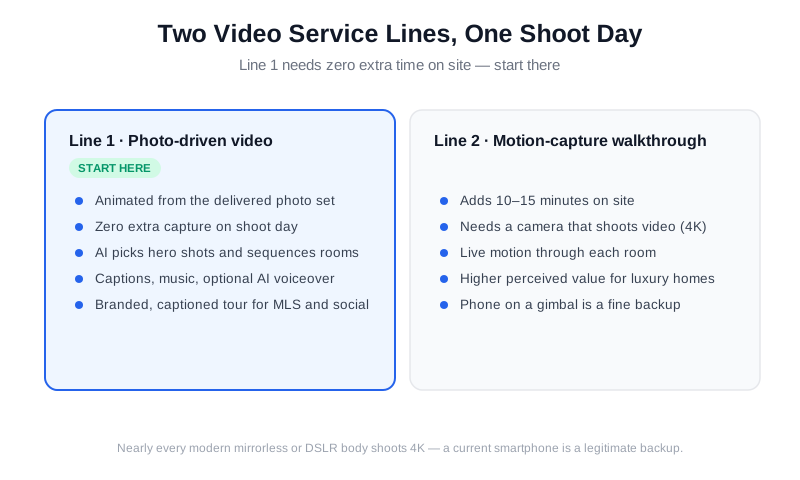
Photo-driven video uses the delivered set; motion capture adds a short, repeatable on-site segment.
Start with Line 1. It requires no workflow change on shoot day, no new gear, and no learning curve — you can invoice your first video add-on within a week of reading this. Add Line 2 once the orders justify the extra on-site time and you have practiced the walkthrough path on a few listings. Photographers who made the pivot report that the motion product commands the higher price, but the photo-driven product is what builds the habit — yours and your clients'.
Where Real Estate Photo Editing Services Fit in a Video Pipeline
Photo-driven video is only as good as the stills it is built from, so your photo editing setup is part of the video product. Most photographers run one of three setups. In-house editing in Lightroom and Photoshop costs 3–6 minutes per image and is the bottleneck that keeps you from adding video. An outsourced real estate photo editing service — the offshore studios in Vietnam, the Philippines, and India, plus the boutique teams in cities like Barcelona that serve European agencies — charges roughly $0.50–$2.00 per image for HDR blending, sky replacement, and color correction, with 12–24 hour turnaround. A professional real estate photo editing service at the higher end ($2–$5 per image) adds hand retouching, twilight conversion, and item removal. AI photo editing handles the same standard edits in seconds per image for a flat monthly fee, which is why it pairs naturally with an AI video line.
Panorama and 360 work is the exception worth pricing separately. Real estate panorama photo editing services stitch, level, and color-match the frames, and most charge $3–$8 per panorama because of the stitching labor. If you sell 360 tours, keep that with a specialist editor; for everything else, pick the setup that returns a finished set fastest, because the video is assembled from that set. Our batch photo editing workflow shows how to move a 30-image set through edit and delivery in under an hour, and our photo editing pricing models guide covers what to charge agents for edited stills versus the bundle. Whichever route you choose, hold one rule: the video must be cut from the delivered set, never from a pre-edit export, or the color will not match.
The Delivery Workflow: From Photo Order to Photo-Plus-Video Order
The photographers who scale video without burning out treat it as a modification of the photo pipeline, not a second business. Here is the workflow that keeps a 24-hour photo turnaround intact while a video ships with it.
- Capture with video in mind: hold each angle steady for two extra seconds and shoot a few vertical clips with your phone for social crops. This is the only shoot-day change Line 1 needs.
- Deliver photos first: run your normal photo edit and delivery on schedule. The video is assembled from the approved set, so the agent sees the familiar product first.
- Let AI do the assembly: feed the finished set into an AI editing pipeline that selects the hero shots, sequences them room by room, adds captions and your brand intro, and cuts the video to the music. What used to take a human editor hours happens in minutes — the same speedup documented in our look at creating listing videos in under 10 minutes.
- Add the audio layer: music-only edits ship fastest. When a listing deserves narration — luxury homes, relocation tours, new construction — a scripted AI voice track reads the listing copy without a studio session, and the caption layer keeps the video effective on muted social feeds.
- QC like a photographer: watch the export twice — once for cuts and captions, once for color and branding. You are selling consistency, so the video must match the photo set's look.
- Deliver as one package: send photos and video in one branded gallery so the agent perceives a single, higher-value order rather than two separate purchases.
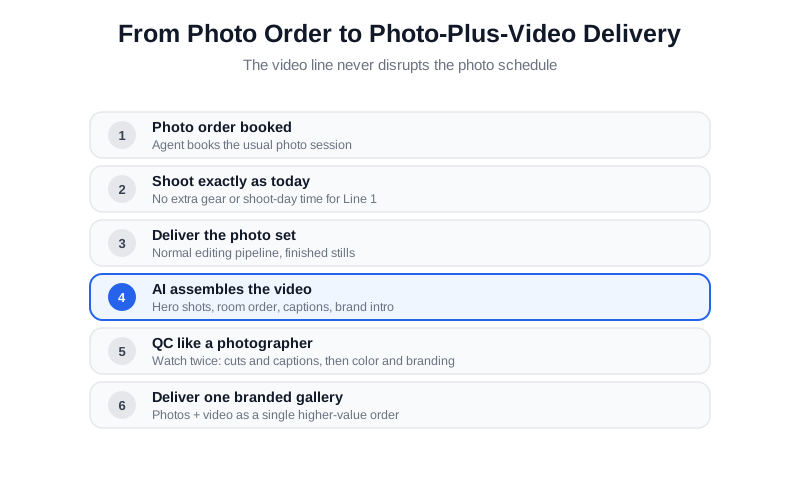
Photo-first delivery, AI assembly, and one branded package keep the video line from disrupting your photo schedule.
The decision that trips up most photographers is whether to edit video themselves, hire an editor, or automate. That choice has real trade-offs — the same ones we mapped in the white-label editing versus automation comparison. For a solo photographer adding a service line, automation is usually the right on-ramp because it has no minimum volume and no per-video floor cost.
Real Estate Video Editing Services: Outsource, Hire, or Automate?
Once you shoot motion, someone has to cut it. A real estate video editing service typically charges $50–$150 per walkthrough for a 60–120 second cut with music, transitions, and a branded intro, and $30–$75 for a 15–30 second vertical social version. A drone video editing service for real estate runs higher — $75–$200 per aerial cut — because stabilization, color grading of flat log footage, and speed ramps take longer. Turnaround from an outsourced editor is usually 24–72 hours. That is workable for a photographer who ships photos next day, but it breaks the "one package, one delivery" promise that makes the add-on easy to sell, and the fix is often worse than the problem, as the photographer in our outsourced video editing case study found out.
Hiring a part-time editor makes sense once you deliver 40+ videos a month. Below that, AI editing is the better economics for most photographers. The AI pipeline picks the usable clips, sequences rooms in walking order, adds real estate video transitions that stay clean (straight cuts and short dissolves, not spin wipes), keys captions, and exports 16:9 and 9:16 in one pass. Videographers who moved to that workflow went from hours per listing to minutes, which we documented in the videographer AI workflow breakdown. For photographers who want the whole media order — stills, photo-driven tour, walkthrough, and aerial clips — to come back as one branded set, VideoGuru is built for that job: upload the photos and raw clips, get a finished, captioned video with your intro, no per-video editor fee.
Drone footage deserves its own note. Adding aerial clips is the single biggest jump in perceived value — one photographer added drone video to listings and saw the package price climb without losing clients, as covered in our drone video add-on case study. Keep drone cuts to 10–20 seconds inside the walkthrough or sell them as a separate line so the agent can compare. Some photographers package the whole thing as a "real estate video box": walkthrough, drone cut, three vertical social clips, and a photo-driven teaser, delivered together at one price. Whatever you call it, the agent should receive one link, not six files.
Packaging and Pricing Video Add-Ons
How you package video matters more than the number you put on it. Three models dominate among photographers who sell video successfully:
- Automatic bundle: every photo order includes a photo-driven video at a set uplift, with an opt-out checkbox. Conversion is highest because no separate decision is required. This is the model that doubled per-client revenue for the photographer profiled in our photo-plus-video packaging case study.
- Tiered listing packages: publish three named packages — Essential (photos), Enhanced (photos + photo-driven video), and Signature (photos + walkthrough video + vertical social cuts). Agents self-select, and the tier names do your selling.
- Recurring content retainer: a monthly fee for a set number of videos across the agent's listings and brand content. This converts video from a per-listing expense into a predictable line item, and it is the model to graduate to once three or four clients buy bundles consistently.
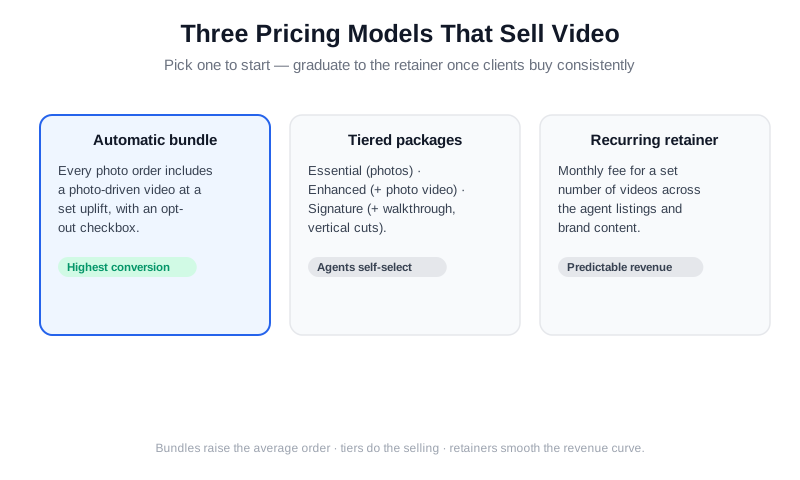
Bundles raise the average order; tiers let agents self-select; retainers smooth the revenue curve.
On the actual numbers: set the uplift where it clears your time and tooling cost with margin to spare, then anchor it to your local photo pricing. The framework in our guide to pricing real estate video services walks through cost-per-deliverable math, and the honest answer in every market is the same: a video add-on should be priced as a premium product on top of photos, not as a discount bundle. If your photo order is the anchor, the video line is where the margin lives.
Sell Video as a Real Estate Marketing Service, Not a File
Agents do not budget for "a video". They budget for marketing the listing, and that money currently goes to real estate marketing services and real estate advertising services — social ad managers, listing-syndication tools, and print. A photographer who delivers video with the shoot competes for that budget from a stronger position than any of them, because you are already at the property. Position the add-on as a marketing service: the walkthrough for the MLS and YouTube, the vertical cuts for Instagram and TikTok, and a 15-second ad cut sized for Meta and Google ads. Priced that way, a $150–$400 video line reads as a fraction of the $500–$2,000 a listing typically spends on advertising, not as an extra invoice.
Local search matters here. When an agent types "real estate video marketing services in Atlanta" (or Denver, or Tampa), the results are agencies that will happily shoot the listing themselves. You want your name in that list. Put a page on your site with the city name, the service names agents search for — real estate video editing, drone video, listing video marketing — and three samples. Two or three of those local searches a month is enough to win an account that would otherwise go to an agency. If you want a step further, offer to run the boosted post for the agent at a flat fee; it takes 10 minutes, and it is the moment you stop being a vendor and start being the agent's marketing partner.
How to Pitch Video to the Clients You Already Have
You do not need a cold-outreach campaign. You need two sample videos made from past listings — one photo-driven, one walkthrough — and a two-sentence pitch: "Every listing you send me can now ship with video built from the same shoot. No second appointment, no extra scheduling — same turnaround." Send it to your last twenty photo clients with one sample attached and a one-click reply format.
Lead with the agent's problem, which is competition for the seller's attention, not video for its own sake. The strongest sellers are pitched the visual proof story: the same argument that wins listings with better photos applies one level up when the media package includes motion. Agents who sell with video also rebook — the client relationships deepen exactly the way they did in the pivot story of a stills photographer who added video, where the first video clients became the most loyal accounts.
What Stays Hard (Be Honest With Yourself)
The AI pipeline removes the editing bottleneck, but three things remain genuinely hard, and pretending otherwise is how quality slips. First, motion capture is a craft: a shaky, meandering walkthrough damages your brand faster than no video at all, so practice the path and watch the footage critically before you sell it. Second, consistency is the product: if your video looks different from your photos, agents will not trust either. Third, disclosure discipline: if your video uses AI-edited or AI-staged imagery, the same MLS rules that govern AI photo disclosure in 2026 apply to the frames moving in your video. Keep your workflow documented so you can state, per listing, exactly what was captured and what was generated.
Frequently Asked Questions
Do I need a video camera to offer video services as a photographer?
Not for your first product line. Photo-driven video is assembled entirely from your finished stills, so you can invoice a video add-on with the gear you already own. For motion-capture walkthroughs, nearly any camera body from the last several years shoots 4K, and a current smartphone produces perfectly acceptable footage for social and MLS use. Buy a gimbal only after the orders justify it.
How much extra time does video add to a listing shoot?
Photo-driven video adds zero time on site — you shoot the listing exactly as you do today. A motion-capture walkthrough adds roughly 10 to 15 minutes per property once you have a practiced path through the house: entry, main living spaces, kitchen, primary suite, outdoor space. The editing time is where AI changes the economics: assembly that took a human editor hours now takes minutes, which is why the add-on can ship alongside a normal photo turnaround.
Should video be bundled with photos or priced separately?
Bundle it. Automatic photo-plus-video bundles and named package tiers consistently outperform standalone video menus because the agent never makes a separate buying decision. Your market's exact uplift depends on your photo pricing and your time cost — the pricing guide for real estate video services walks through the math — but the structural answer is the same everywhere: video is a premium add-on to the photo order, and the margin lives in the bundle.
Will AI video editing replace the need to learn editing software?
For standard listing deliverables, yes — AI tools now handle selection, sequencing, captions, and branding well enough that a photographer's editing skill matters less than capture quality and judgment. What does not go away is quality control: watching the export for bad cuts, color mismatches, and caption errors is still your job, and it is the job that protects your brand. The hybrid pipeline — AI assembly plus photographer QC — is the same structure photographers already use in AI-assisted photo editing workflows.
Do MLS rules require disclosing AI-generated video content?
MLS AI policies currently focus on images and virtual staging, and they are expanding as AI-generated video becomes common. When your video animates real photos with no altered content, disclosure is usually unnecessary. When it includes AI staging, AI-edited imagery, or synthetic voiceover, follow the same disclosure discipline you use for photos and check your MLS's current policy before publishing. When in doubt, note in the video description that elements are AI-generated.
How do I find the best real estate videographer in my area?
Start with the photographer you already use — if they offer video, you get one shoot, one invoice, and a video that matches the photos. If you need to search, look at three things: a portfolio of 5+ listing videos in your price band, turnaround of 48 hours or less, and both horizontal and vertical deliverables in the base price. Expect $150–$400 for a standard walkthrough and $300–$800 for luxury listings ($2M+) with drone. Photographers reading this: that checklist is your pitch, and a sample reel on your site is what gets you found.
Ready to turn your next photo order into a photo-plus-video package? VideoGuru's AI editing platform turns the listing photos you already deliver into polished, branded, captioned videos — and its photo editing tools handle virtual staging and enhancement on the same platform, so one workflow covers your whole media output. Start for free at VideoGuru.
Final Thoughts
The 7% gap is closing — video is becoming table stakes for listings, and the only question is who the agent buys it from. Photographers have the incumbency: the property access, the client trust, the finished photo set, and now an AI pipeline that assembles the video in minutes. The photographers who capture this moment are not the ones who buy the most gear. They are the ones who package the service, ship it with the next photo order, and let the samples sell the third, fourth, and fifth listings. Start with one video on your next shoot, deliver it as a bundle, and let the margin make the case for the workflow.