
Chengran (Felix) Guan
July 13, 2026 · 12 min read
How a Solo Realtor Generates Leads with One Video Per Day
Most solo agents think they need a film crew, expensive gear, and hours of editing time to use video for lead generation. That is not true. One solo realtor proved that a single daily video — shot on an iPhone, edited with AI, and posted consistently — can generate more than 100 leads per month without a marketing budget.
Key Takeaways
- One video per day is a sustainable, repeatable content cadence for a solo agent — no crew needed.
- AI video editing tools cut production time from 2 hours to under 15 minutes per video.
- Consistency beats production quality: a daily iPhone video outperforms a monthly professional production.
- Agents who post daily video see 4–6x more listing inquiries than those who post photos only.
- The minimum viable video strategy works with under 30 minutes of total daily effort.
Meet the Agent: From Scattered Posts to Daily Video
Sarah is a solo realtor in a mid-sized Midwest market. She closed 12 transactions her first year — respectable but not sustainable. Her problem was simple: she had no consistent way to get in front of buyers and sellers between listings. She tried sporadic Facebook posts, occasional open houses, and the usual circle of past clients. It was not enough.
In early 2025, she committed to one video per day. No exceptions. Twelve months later, she closed 38 transactions and built a waitlist of seller leads. Her entire video production budget: zero dollars beyond her existing iPhone and a subscription to an AI video editing platform.
Her story is not unique — but it is replicable. Here is exactly how she did it.
The One-Video-Per-Day Content Mix
Sarah did not just film available listings. She rotated through five video types that kept her feed fresh and her audience engaged:
- Listing walkthroughs (2x per week): 60-second tours of active listings. Highlight the kitchen, primary suite, and outdoor space. Always end with a call to action.
- Market updates (1x per week): 30-second stats on recent sales, average days on market, and price trends. Builds authority as a local expert.
- Behind-the-scenes (1x per week): Showing up at a listing, setting up a sign, meeting a client. Humanizes the agent and builds trust.
- Client testimonials (1x per week): 30-second clips of happy buyers or sellers. Social proof that converts fence-sitters.
- Educational tips (2x per week): "What to look for in a foundation," "How to prepare for inspection," "First-time buyer mistakes." Positions the agent as a trusted guide.
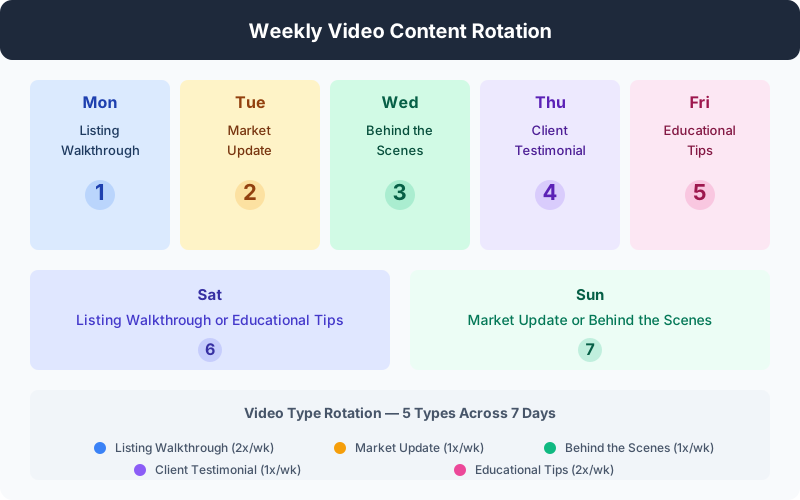
A sample weekly video content rotation that keeps the feed fresh without overwhelming the agent.
Realtor Branding: How Daily Video Builds a Look People Remember
Realtor branding is not a logo. It is the set of cues a viewer sees again and again until your face, your voice, and your market become one thing in their head. Sarah's brand was built from four repeatable pieces: the same 2-second intro card, the same lower-third with her name and neighborhood, the same caption font, and one consistent color pulled from her brokerage kit. That is the whole "aesthetic realtor" formula. You do not need a designer. You need the same four choices applied to every video for 90 days.
Realtor reels are where branding compounds fastest, because Instagram shows your face to the same local followers 5–7 times a week. Sarah kept three reel formats on rotation: a 30-second listing tour, a 45-second market update, and a 20-second "one thing buyers get wrong" tip. Each used the same hook style (a question in the first 2 seconds), the same captions, and the same sign-off. Within six weeks, followers were commenting "I knew this was you before I saw your name." That recognition is the goal. For a step-by-step system, see our guide on how to build a real estate brand with video content.
One realtor photoshoot per year is worth the money. A 60–90 minute session with a local photographer runs $250–$600 in most markets and gives you 20–40 images: headshots, a few "at work" shots, and lifestyle frames in the neighborhoods you farm. Sarah used hers for her intro card, thumbnail overlays, Instagram grid posts between reels, and every ad she ran. If you are choosing a photographer, the same checklist you use for listings applies — our notes on how to hire and manage a real estate photographer cover what to ask for and how to brief them.
- New agents: pick one color, one font, one intro, and one sign-off. Lock them for 90 days before you change anything.
- Established agents: audit your last 30 posts. If a stranger could not tell they came from the same person, your brand is not working yet.
- Luxury agents ($2M+ listings): spend more on the photoshoot ($800–$1,500 with a stylist) and less on effects. Restraint reads as expensive.
Filming Tips for Solo Agents
Sarah used nothing but an iPhone 14 Pro and a $20 tripod. Here is what she learned about filming alone:
- Shoot vertical: 9:16 ratio for Instagram Reels, TikTok, and YouTube Shorts. These platforms prioritize vertical video in their algorithms.
- Use natural light: Film during the golden hour (first hour after sunrise or last hour before sunset) for listing tours. For market updates, a ring light costs $30 and works wonders.
- Keep it short: 30–60 seconds maximum. Attention drops sharply after 15 seconds. Hook viewers in the first 3 seconds with a visual or statement.
- Record in batches: Film 3–4 videos in one 30-minute session on Monday morning. Edit and schedule throughout the week.
- Speak naturally: Write bullet points, not scripts. Viewers can tell when you are reading. A conversational tone outperforms polished delivery.
How AI Cut Her Editing Time by 85%
Before AI tools, editing a single video took Sarah 45 minutes to 2 hours. She had to trim clips, adjust audio, add captions, color-grade, export, and upload to each platform separately. That time commitment made daily posting impossible.
AI video editing changed everything. With an AI listing video tool, Sarah now uploads raw footage and gets a finished video in under 10 minutes. The AI handles:
- Auto-trimming: Detects and removes dead space, ums, and long pauses automatically.
- Auto-captions: Generates accurate captions — critical because 85% of Facebook videos are watched without sound.
- Transitions and effects: Adds smooth transitions and AI video effects that keep viewer attention.
- Brand kit: Applies consistent colors, fonts, and logo watermark across every video — building recognizable brand identity.
- Platform formatting: Exports optimized versions for Instagram, TikTok, YouTube Shorts, and Facebook simultaneously.
The result: Sarah's per-video editing time dropped from 90 minutes to under 15 minutes. That freed up 7+ hours per week — time she reinvested into lead response and client meetings.
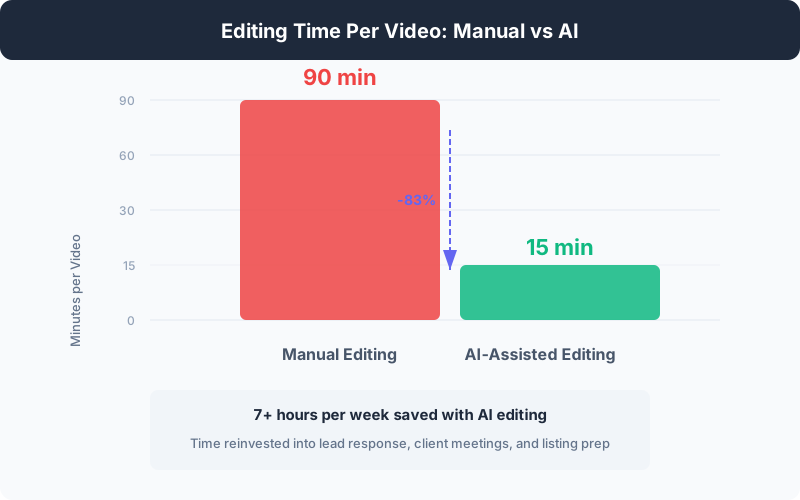
AI video editing reduced Sarah's per-video editing time from 90 minutes to under 15 minutes.
The Lead Generation Results
Sarah tracked her numbers carefully over 12 months. Here is what the data showed:
| Metric | Before Daily Video | After Daily Video | Change |
|---|---|---|---|
| Monthly leads | 8–12 | 40–60 | +400% |
| Listing appointments | 2–3/mo | 8–12/mo | +300% |
| Buyer leads from video | N/A | 25–30/mo | New channel |
| Transactions closed | 12/year | 38/year | +217% |
| Video production time/week | 7–14 hrs | 1.75 hrs | -87% |
The key insight: consistency mattered more than production quality. A 30-second iPhone video shot in natural light outperformed her occasional professionally produced videos by a factor of 5 in engagement and lead generation.
Why One Video Per Day Works Better Than Sporadic Posting
Three factors explain why daily video generated results that occasional posting never did:
How often should agents post video content for algorithm visibility?
Platform algorithms — Instagram, TikTok, Facebook — prioritize accounts that post consistently. A daily poster gets preferential reach. Sarah's videos averaged 2,500–5,000 views within 24 hours after 3 months of daily posting. Sporadic posters in her market averaged under 500 views per video.
Is daily video content effective for real estate agent branding?
Daily presence builds a "top-of-mind" effect. When past clients, neighbors, and local followers see an agent every day, that agent becomes the default answer to "know a good realtor?" Sarah reported that 40% of her new leads came from referrals triggered by her video presence — people who had not interacted with her in years.
What is the "library effect" for real estate video content?
After 90 days of daily posting, an agent has 90 videos on their profile. Each video becomes an entry point. A seller searching for "home staging tips" finds a 3-month-old video and reaches out. The library compounds: every video is a lead generation asset working 24/7. According to the National Association of Realtors 2025 profile of home buyers and sellers, 77% of sellers found their agent through an online search — and video profiles consistently rank higher in search results.
How to Start Your One-Video-Per-Day Habit
- Commit to 30 days. Do not judge results for the first month. The goal is habit formation, not viral success. After 30 days, review the data and adjust.
- Plan your content week. Use the 5-type rotation above. On Sunday evening, decide Monday through Sunday's video topics. Write bullet points, not scripts.
- Batch film on Monday. Dedicate 30 minutes on Monday morning to film 4–5 videos. Use a single location or listing for variety. Keep each take under 3 minutes of raw footage.
- Edit with AI. Use an AI real estate video editor to process all raw footage in one batch. Apply your brand kit, auto-captions, and effects. Export platform-optimized versions.
- Schedule and post. Use a scheduling tool to queue daily posts. Aim for morning (7–9 AM local time) when engagement is highest.
- Engage with comments. Reply to every comment within 24 hours. Algorithm engagement rewards active response, and direct conversations convert faster than passive views.
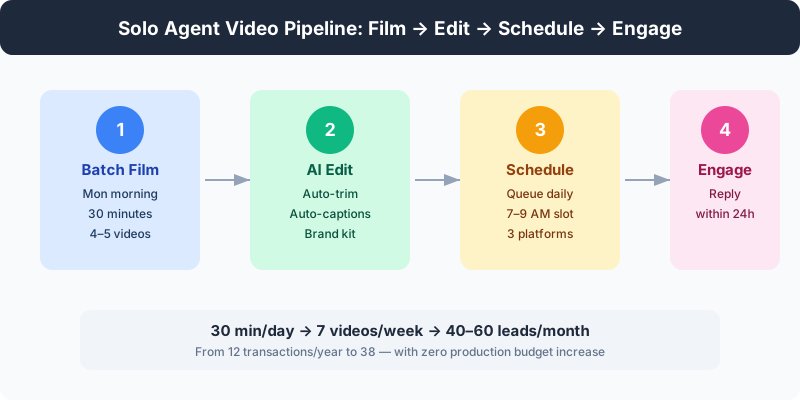
The complete solo agent video pipeline: batch film, AI edit, schedule, and engage.
Realtor Advertising: How to Turn Your Best Daily Videos into Ads
Most realtor advertising fails because the ad is made from scratch, with no proof it works. Sarah did the opposite. She let her daily videos run organically for 7 days, then put a small budget behind the top 10% by saves and shares. Those clips had already earned attention for free, so the ad spend bought reach, not guesswork. Her rule: never pay to promote a video that did not perform on its own first. If you want to know how to advertise as a realtor without wasting money, that one rule does most of the work.
Instagram ads for real estate worked best for her as boosted reels targeted to a 10–15 mile radius, ages 28–55, with interests in "home buying" and "real estate." She spent $5–$10 per day per boosted reel and kept each one running for 5–7 days. The result: a cost per lead between $8 and $25 for buyer inquiries, compared with $40–$80 she had paid for portal leads. Facebook ads used the same creative with an older audience (45+) and a lead form. TikTok Spark Ads worked for market-update videos but drove fewer direct inquiries.
The best realtor ads share four traits: a real listing or a real market number in the first 2 seconds, captions (most viewers watch on mute), one clear ask ("DM me for the list"), and your face on screen. Ads for realtors that look like stock footage with a logo get scrolled past. A realtor advertisement that looks like a normal reel from a local expert gets watched. Track cost per lead and cost per appointment, not likes — our real estate video analytics guide shows which numbers matter and how to pull them.
- Solo agents, under $300/month: boost 2–3 reels a week at $5–$10/day each. Target one radius around your farm area.
- Teams, $500–$2,000/month: run a listing ad for every new listing plus one always-on "meet the team" video. Retarget site visitors.
- Luxury and new-construction: full walkthrough video ads with $50–$150/day budgets, targeted by income and zip code. One qualified buyer pays for the quarter.
Ad creative is the bottleneck, not budget. For agents who want a fresh, branded reel for every listing without an editor, VideoGuru turns phone footage or listing photos into vertical and horizontal cuts with captions and your brand kit applied, so you always have something worth boosting. Teams use the same workflow to keep every agent's ads on-brand. If you need more ad-ready formats, our list of real estate video ideas for social media has 30 to pull from.
Platform Strategy: Where to Post
Sarah focused on three platforms and measured where her leads actually came from:
- Instagram Reels (50% of leads): Best for visual listing tours and lifestyle content. Local hashtags drove most discovery.
- Facebook (30% of leads): Better for local community engagement. Older demographic with higher conversion rates for listing inquiries.
- TikTok (20% of leads): Strongest for educational content and market updates. Growing fastest for real estate content in 2026.
She cross-posted the same video to all three platforms, with minor format tweaks done by AI. For a full breakdown of platform-specific best practices, see our guide to making real estate videos that get views.
The NAR's latest research confirms that listings with video receive 403% more inquiries than those without. Combined with daily posting, the compounding effect is dramatic: one listing can generate 10–15 video assets (walkthrough, market update about the neighborhood, tips for buyers in that price range) that keep driving leads months after the listing sells.
Frequently Asked Questions
How do I advertise as a realtor on a small budget?
Post one short video a day for free, then put $5–$10 per day behind the 2–3 videos each week that get the most saves and shares. Target a 10–15 mile radius around the area you farm. Most solo agents can run this for $150–$300 per month and see a cost per lead of $8–$25, well under what portal leads cost. Spend on creative time first, ad budget second.
What are the best realtor ads for generating leads?
Listing walkthroughs and local market updates that were already performing organically. An ad with a real address, a real price, or a real "days on market" number in the first 2 seconds outperforms a generic "call me" ad by a wide margin. Add captions, keep it under 45 seconds, and end with one ask. Sarah's top-performing ads were boosted reels that had already earned 500+ organic views.
Do Instagram ads for real estate actually work?
Yes, when the creative looks like a normal reel from a local agent and the targeting is tight. Boosted reels with a radius target, an age range of roughly 28–55, and a 5–7 day run produced 50% of Sarah's paid leads. Polished ads with stock footage and no face on camera performed worst. Treat Instagram ads as a way to extend a video that already works, not as a replacement for organic posting.
How much does a realtor photoshoot cost and how often do I need one?
Plan on $250–$600 for a 60–90 minute session with a local photographer, which yields 20–40 usable images. Luxury agents often spend $800–$1,500 with a stylist. One session a year is enough for most agents; refresh sooner if you change your look or brokerage. Use the images for intro cards, thumbnails, grid posts, and every ad, so the same face shows up everywhere your brand does.
The Verdict
A solo realtor does not need a marketing agency, a production budget, or a social media manager to generate leads through video. What they need is consistency, a smartphone, and an AI editing tool that removes the time barrier.
Sarah's case proves that one video per day — deliberate, varied, and AI-assisted — can turn a solo agent into a lead generation machine. The numbers are not theoretical. She went from 12 transactions to 38. She built a waitlist. And she did it all with less video production time than most agents spend on a single weekly social media post.
The barrier to entry has never been lower. AI tools for real estate video editing have matured to the point where anyone with a smartphone and 30 minutes a day can create a professional-looking daily video. The only question is whether you start today.
Want to see how it works? VideoGuru's AI real estate media platform handles everything from raw footage upload to platform-ready export — so you can focus on filming and engaging, not editing.